News Flash: NVIDIA's Rubin HPC, Tencent Launches Hy4 flash, & Claude was trained?
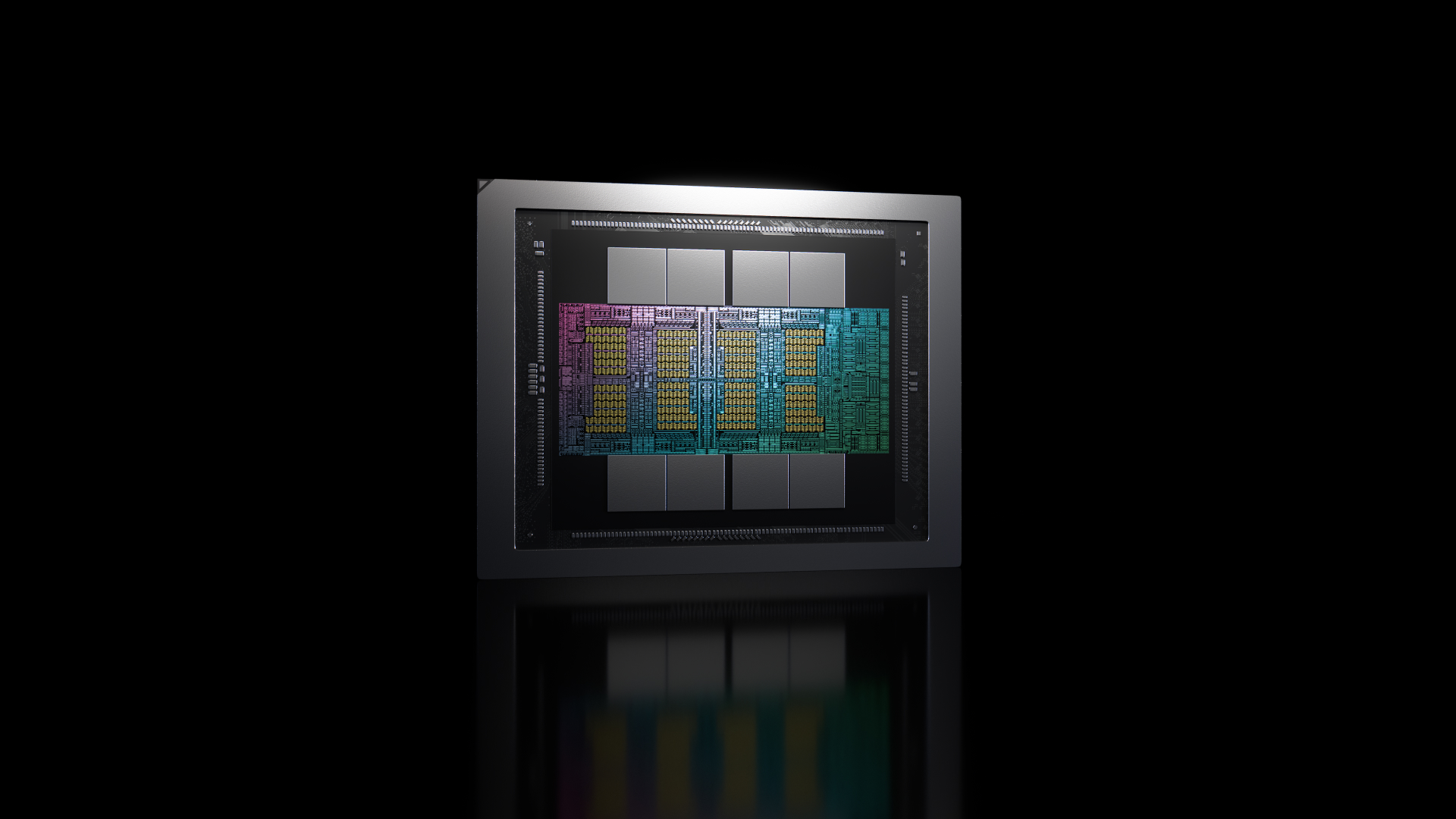
1. NVIDIA Announces Rubin HPC: A 50,000-Core Leap for Scientific Agents
The News Highlight:
At the SC26 conference, NVIDIA unveiled the Rubin HPC, a specialized GPU within the Vera Rubin platform engineered to accelerate the simulations that AI agents utilize for scientific discovery, engineering, and advanced analytics. As AI agents increasingly drive the exploration of new materials and molecular designs, the demand for high-fidelity simulation has skyrocketed. The Rubin HPC addresses this by providing a massive increase in compute density and data movement efficiency, aiming to drastically shorten the cycle between hypothesis and discovery in fields like climate modeling and genomic analysis.
- Record Core Density: Features over 50,000 CUDA cores on a single GPU, the highest count ever recorded for a single processor.
- Balanced Architecture: Implements a design that scales data movement in tandem with compute, utilizing sparse data acceleration to ensure cores remain saturated.
- Advanced Interconnect: Equipped with seventh-generation NVIDIA NVLink technology to optimize GPU-to-GPU connectivity for massive scale-out workloads.
- Availability: The Rubin HPC is slated for release in 2028, signaling a long-term roadmap for agent-led scientific computing.
DO-AI Analysis:
The Rubin HPC represents a fundamental shift from "general-purpose AI" hardware to "agent-centric simulation" hardware. From an architectural perspective, the bottleneck in scientific AI isn't just FLOPs; it is the latency of the feedback loop where an agent proposes a design and a simulation validates it. By packing 50,000 cores and prioritizing sparse data movement, NVIDIA is optimizing for the high-entropy, scattered data patterns typical of scientific workloads. Engineering teams should view this as a signal that the next frontier of enterprise AI isn't just chat, but the integration of agentic reasoning with massive-scale physical simulations.
2. Tencent Launches Hy4 Flash to Disrupt Cost-Efficient AI Deployments
The News Highlight:
Tencent has officially released Hy4 flash, a new AI model specifically optimized for high-speed, low-cost performance in everyday enterprise workflows. The model is designed to bridge the gap between expensive frontier models and lightweight utility models. In internal blind testing conducted by Tencent, Hy4 flash achieved user satisfaction scores that closely rivaled Anthropic’s Claude Haiku 5.5, suggesting that the model provides high-tier reasoning and instruction-following capabilities at a fraction of the typical operational overhead.
- Targeted Utility: Optimized for high-frequency, everyday tasks such as summarization, basic coding assistance, and workflow automation.
- Performance Benchmark: Satisfaction scores in blind tests are nearly identical to Claude Haiku 5.5, a leading Western benchmark for efficient models.
- Cost-Efficiency: Engineered for rapid deployment within the Tencent Cloud ecosystem, focusing on reducing the "inference tax" for developers.
- Deployment Focus: Specifically tuned for high-speed response times to power real-time AI interactions in consumer and business applications.
DO-AI Analysis:
Hy4 flash is a strategic move into the "commodity AI" layer, where the battle is won on price-to-performance ratios rather than raw parameter count. For architects, this reinforces the trend of model specialization: using "heavy" models for complex reasoning while offloading 80% of standard production traffic to "flash" models like Hy4. The fact that it matches Claude Haiku 5.5 in user satisfaction indicates that for most enterprise "plumbing" tasks, we have reached a point of diminishing returns for larger models, making cost-optimized inference the primary architectural driver.
3. Claude’s Hidden Strength: Large-Scale Protein Sequence Pre-training Revealed
The News Highlight:
Recent independent research has confirmed that Anthropic’s latest models, specifically Claude Fable 5.2 and Opus 5.5, were trained on massive datasets of protein sequences. Unlike other frontier models that rely on textual descriptions of proteins, Claude demonstrates the ability to predict the next amino acid in obscure, little-studied bacterial proteins—a task that requires a deep understanding of biological "grammar." The study found that Claude’s performance drops significantly when sequences are shuffled, proving it has learned the structural logic of proteins rather than just memorizing names or facts from scientific papers.
- Superior Bio-Modeling: Claude Fable 5.2 outperformed every open-source protein language model (PLM) tested in next-amino-acid prediction.
- Opus 5.5 Parity: The Opus 5.5 model reached performance levels comparable to ProtGPT3-10B, one of the largest dedicated protein models.
- Zero-Shot Discovery: The models successfully predicted sequences for protein families with zero associated scientific literature, indicating true generalization of biological patterns.
- Structural Integrity: The models fail the "shuffled sequence" test, confirming they are analyzing the specific order of amino acids rather than relying on statistical word associations.
DO-AI Analysis:
This discovery highlights a significant architectural convergence: the merging of natural language processing and biological sequence modeling within a single transformer architecture. For engineering teams in biotech or pharma, this suggests that general-purpose frontier models like Claude are becoming viable alternatives—or at least powerful supplements—to specialized protein language models. The ability to reason across both scientific text and raw biological code within the same context window opens new possibilities for automated drug discovery and synthetic biology workflows that were previously siloed.
Morning Executive Comparison Matrix
| Dispatch |
Core Domain |
Production Maturity |
DO-AI Recommendation |
| NVIDIA Rubin HPC |
Hardware / HPC |
Research (2028) |
Prepare for agent-led simulation architectures. |
| Tencent Hy4 flash |
LLM / Efficiency |
Production Ready |
Ideal for high-volume, cost-sensitive utility tasks. |
| Claude Protein Training |
Bio-AI / Frontier |
Production Ready |
Leverage for cross-domain biotech R&D workflows. |