News Flash: Google's New TPU Lineup, Meta Ember, & Claude Fable 5.2?
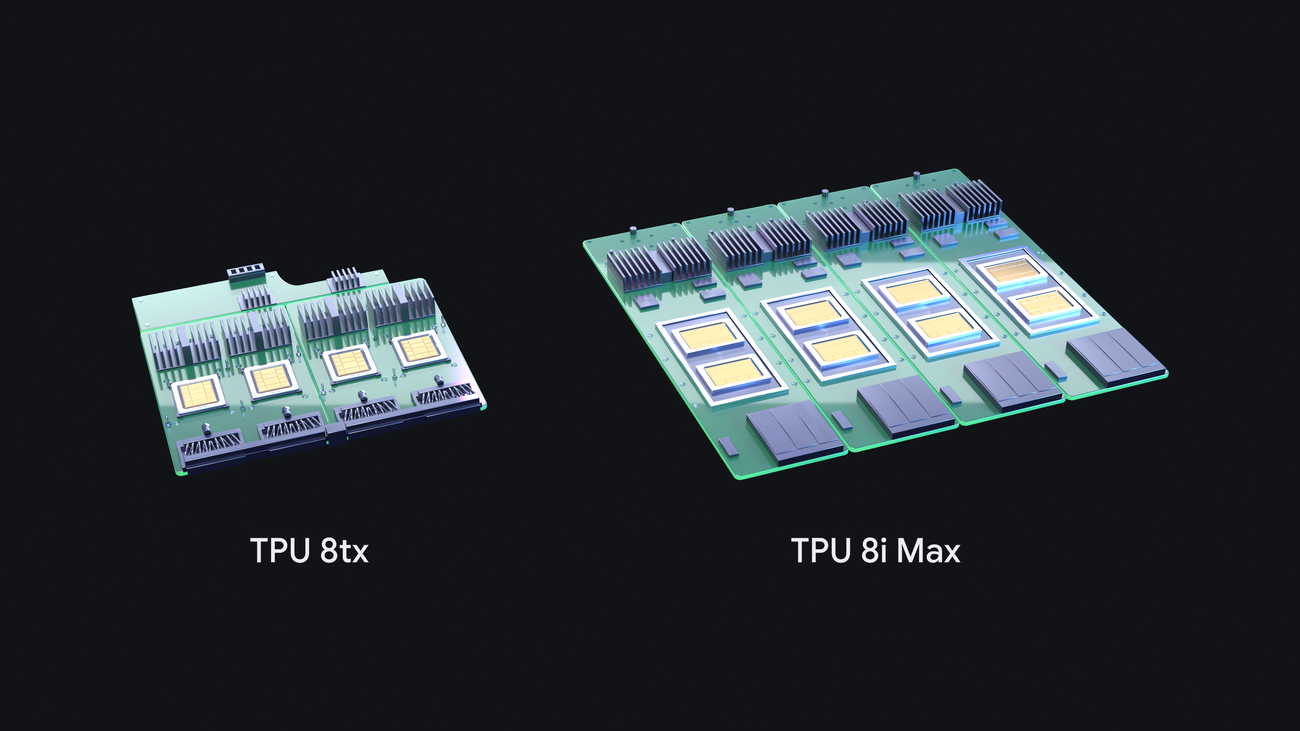
1. Google Unveils TPU 8i Max and 8tx for the Agentic Era
The News Highlight:
Google has expanded its custom silicon portfolio with the introduction of the TPU 8i Max and TPU 8tx, specifically engineered to support the high-density compute requirements of modern AI agents. While the TPU 8i Max focuses on providing massive context windows and superior compute density for large-scale deployments, the TPU 8tx introduces a critical layer of secure and confidential inference. This hardware refresh signals Google's commitment to vertical integration, ensuring that its infrastructure can handle the complex, multi-step reasoning tasks that define the next generation of autonomous AI systems.
- TPU 8i Max: Designed for massive context window support and high compute density to handle long-form data processing and complex model architectures.
- TPU 8tx: Features hardware-level support for confidential computing, allowing for secure inference on sensitive enterprise data without exposing it to the underlying infrastructure.
- Agentic Optimization: Both chips are architected to reduce latency in the iterative loops required by AI agents for tool-calling, multi-step reasoning, and real-time interaction.
DO-AI Analysis:
The release of the TPU 8i Max and 8tx represents a strategic pivot from general-purpose AI acceleration toward specialized "agentic" infrastructure. From an architectural standpoint, the inclusion of confidential inference in the 8tx is the most significant move for enterprise adoption, as it addresses the primary bottleneck for regulated industries: data privacy during the inference phase. Engineering teams should view this as a signal that the "context window war" is moving into the hardware layer, where local memory bandwidth and secure enclaves will dictate which platforms can truly host production-grade autonomous agents.
2. Meta Muse Ember: The New Efficiency Frontier for Reasoning
The News Highlight:
Meta has launched Muse Ember, a compact reasoning model specifically optimized for the high-frequency tasks that power AI agents, such as tool calling, code generation, and document parsing. Despite its smaller footprint, Meta claims Muse Ember achieves reasoning scores comparable to Claude Haiku 5.5 while operating at approximately one-third of the cost. By outperforming GPT-6 Luna across various reasoning benchmarks, Muse Ember positions itself as a leader in the "intelligence-per-dollar" category, targeting developers who need to scale complex agentic workflows without the prohibitive costs of frontier-class models.
- Performance Parity: Matches Claude Haiku 5.5’s highest reasoning scores at roughly 33% of the operational cost.
- Task Specialization: Optimized for "agentic" subtasks including routing, extraction, and multi-step tool execution.
- Benchmark Leadership: Outperforms GPT-6 Luna in reasoning settings and sits at the top of the Artificial Analysis efficiency frontier for cost-to-intelligence ratio.
DO-AI Analysis:
Muse Ember validates the industry's shift toward "Small Reasoning Models" (SRMs) where the goal isn't just raw parameter count, but the efficiency of the reasoning loop. For architects, this model provides a viable path for offloading high-volume, low-latency agentic tasks—like routing or initial document parsing—away from expensive frontier models. The trade-off here is clear: you are sacrificing the broad "world knowledge" of a GPT-6 for a highly tuned, cost-effective execution engine that excels in structured environments, making it an ideal candidate for the "middle layer" of an agentic stack.
3. Anthropic Releases Claude Fable and Mythos 5.2
The News Highlight:
Anthropic has announced the release of Claude Fable 5.2 and Mythos 5.2, bringing significant performance and efficiency gains to its flagship model family. These updates boast a 30% increase in output generation speed and a revised pricing structure that lowers the barrier to entry for enterprise developers. While both models share the same underlying architecture, Fable 5.2 is designed for general use with robust safety guardrails, whereas Mythos 5.2 is reserved for specialized cybersecurity and biomedical research through a verified access program. The update also introduces an optional "fast mode" that can accelerate token generation by up to 2.5 times for time-sensitive applications.
- Speed and Cost: 30% faster generation than version 5.1, with pricing set at $8 per million input tokens and $40 per million output tokens.
- Fast Mode: A new optional tier providing 2.5x speed increases at a premium price point ($16 per million input tokens and $80 per million output tokens).
- Specialized Access: Mythos 5.2 is restricted to verified organizations for high-stakes research in biology and cyber-defense, featuring specialized safeguards.
DO-AI Analysis:
The 5.2 update focuses on the "productionization" of Claude, prioritizing latency and throughput over massive leaps in raw capability. The introduction of a "fast mode" is a direct response to the demand for real-time interactive AI, where the 2.5x speed boost justifies the 2x price premium for specific UX-critical use cases. Architecturally, the dual-release of Fable and Mythos demonstrates Anthropic’s strategy of "capability gating"—using the same weights but applying different safety filters and access controls—which allows them to push the frontier of technical research (Mythos) while maintaining a safe, general-purpose product (Fable).
Morning Executive Comparison Matrix
| Dispatch |
Core Domain |
Production Maturity |
DO-AI Recommendation |
| Google TPU 8i/8tx |
AI Infrastructure |
High (Cloud Ready) |
Adopt 8tx for sensitive enterprise inference. |
| Meta Muse Ember |
Agentic Reasoning |
Emerging (Efficiency King) |
Use for high-volume tool-calling and routing. |
| Claude 5.2 Series |
Frontier Models |
High (Enterprise Grade) |
Upgrade for 30% speed gains in coding workflows. |