News Flash: OpenAI nears up to $30, 1Password for Agents, & WorldTUI: I trained?
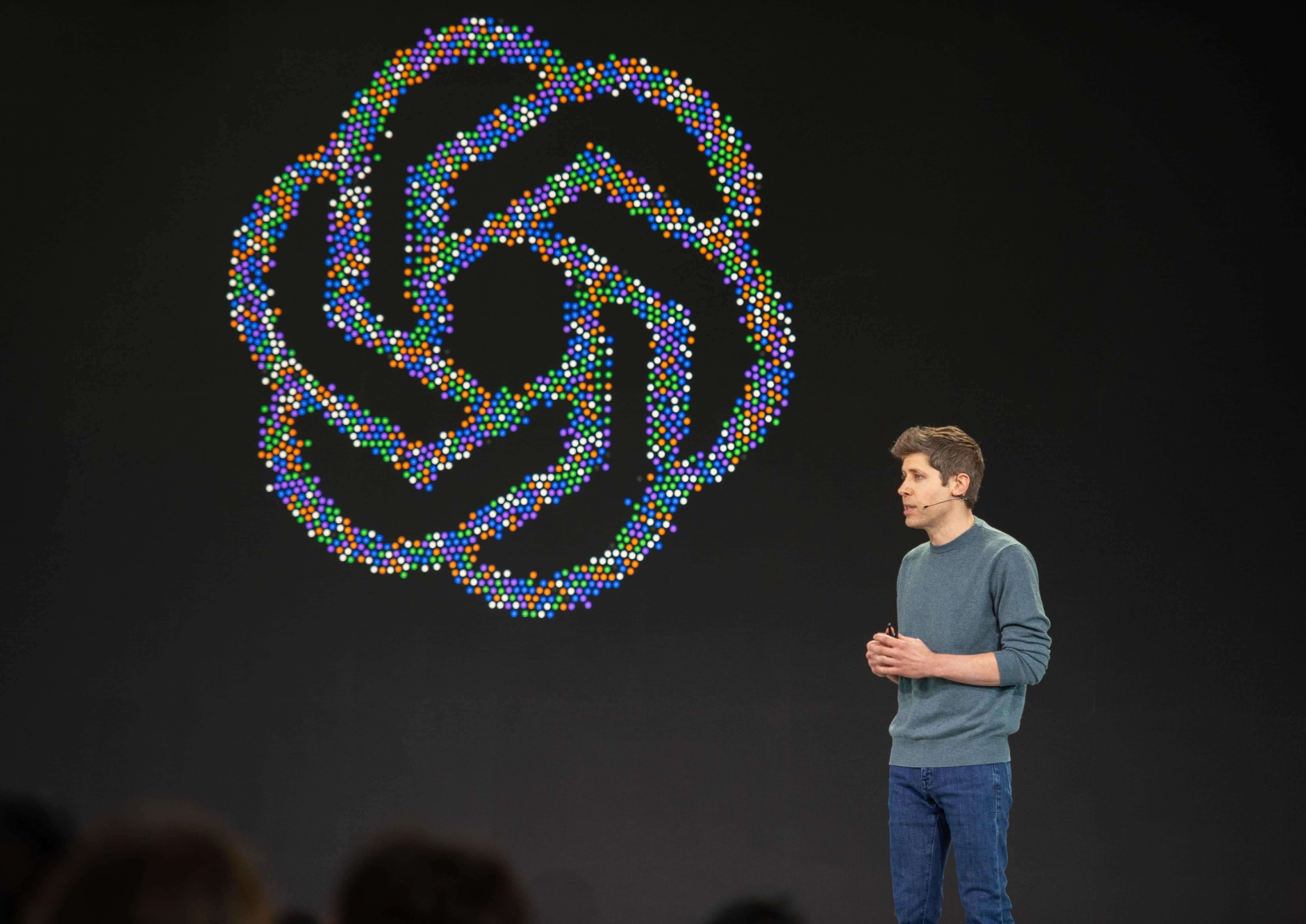
1. OpenAI Nears $1.25 Trillion Valuation in $30 Billion Funding Round
The News Highlight:
OpenAI is reportedly finalizing a massive funding round of up to $30 billion, propelling its pre-money valuation to a staggering $1.25 trillion. Led by investors from the United Arab Emirates and Coatue, this capital injection is being positioned as a strategic bridge to a potential initial public offering (IPO). The move underscores the immense capital requirements for maintaining a lead in the frontier model race and signals a shift toward sovereign-level investment in AI infrastructure.
- [Valuation Milestone]: The $1.25 trillion pre-money valuation places OpenAI among the most valuable entities globally, rivaling major tech incumbents.
- [Lead Investors]: The round is spearheaded by UAE-based entities and Coatue, highlighting the geopolitical importance of AI leadership.
- [IPO Strategy]: This financing acts as an "opportunistic bridge," providing the liquidity needed to scale compute and talent before a public listing.
- [Timeline]: OpenAI aims to secure final signatures by the end of next week, though the final round size remains fluid.
DO-AI Analysis:
From an architectural standpoint, this valuation is not just about software; it is a bet on the "Compute-as-a-State" model. OpenAI is transitioning from a research lab to a global utility provider. For enterprise architects, this signals that the cost of "Frontier-class" intelligence will remain high, necessitating a multi-layered strategy that balances these trillion-dollar models with smaller, specialized on-premise solutions. The reliance on sovereign wealth also suggests that future AI availability may be subject to geopolitical stability and energy-grid capacity.
2. 1Password for Agents: Securing the "Agentic" Identity Layer
The News Highlight:
1Password has introduced a dedicated platform designed to solve the critical security bottleneck of AI agents: authentication. "1Password for Agents" allows autonomous AI entities to log into websites and services without ever seeing or storing the user's actual passwords. By acting as a secure intermediary, the platform enables users to approve credential requests, which 1Password then autofills directly into the destination site, ensuring the agent remains "blind" to the sensitive data while still being able to perform tasks.
- [Zero-Knowledge Access]: Agents request credentials from a vault; 1Password injects them into the UI, preventing the agent from scraping or leaking the plaintext password.
- [User-in-the-Loop]: Every authentication request requires explicit user approval, maintaining human oversight over agent actions.
- [Broad Integration]: The platform supports major agents including OpenAI’s ChatGPT Work, Anthropic’s Claude, and SpaceXSI’s Grok Bot.
- [Developer Tooling]: Provides a secure way for developers to build "action-oriented" agents that interact with legacy web interfaces without compromising IAM (Identity and Access Management) protocols.
DO-AI Analysis:
The industry is moving from "Chatbots" to "Action-Bots," and the primary friction point is the security of the session. 1Password's approach is a pragmatic "bridge" architecture. It treats the AI agent as a non-human identity (NHI) that requires a proxy for legacy web authentication. For engineering teams, this is a mandatory pattern: never pass raw credentials into a model's context window. This platform formalizes the "Secure Proxy" pattern for agentic workflows, which is essential for production-grade enterprise deployments.
3. WorldTUI: Simulating a Terminal Environment via a 360M Parameter Model
The News Highlight:
WorldTUI is a breakthrough experiment in "World Models" for software interfaces, where a 360-million-parameter model has been trained to simulate a functional terminal. Unlike a traditional shell, there is no underlying filesystem or kernel; the model predicts the visual state of the screen character-by-character based on user keypresses. Despite the lack of "real" code execution, the model can convincingly simulate complex applications like vim, tmux, and even games like Snake, maintaining state consistency across commands.
- [Model Architecture]: Built on the Qwen2.5-Coder-0.5B base and fine-tuned on terminal sessions recorded within Docker environments.
- [State Management]: The model predicts screen changes (deltas) rather than just appending text, allowing it to handle "clear" commands and cursor movements.
- [Self-Correction]: Includes a "repair" mechanism where the model can fix its own output mistakes to maintain a coherent UI state.
- [Performance]: Optimized for browser-based execution using WebGPU, allowing for parallel decoding of screen rows.
DO-AI Analysis:
WorldTUI demonstrates the "Hallucinated UI" paradigm. It proves that small, specialized models can learn the "physics" of a software interface without needing the underlying logic. This has profound implications for legacy system modernization: instead of refactoring 30-year-old COBOL code, we might eventually wrap it in a "World Model" that simulates the interface perfectly while translating intent to modern APIs. It shifts the focus from "writing code" to "learning behavior," a core tenet of the next generation of autonomous architecture.
Morning Executive Comparison Matrix
| Dispatch |
Core Domain |
Production Maturity |
DO-AI Recommendation |
| OpenAI $1.25T Round |
AI Infrastructure |
High (Market Leader) |
Hedge with SLMs; monitor IPO for governance shifts. |
| 1Password for Agents |
Security & IAM |
Beta / Early Prod |
Adopt immediately for any agentic web-automation. |
| WorldTUI |
Generative UI / World Models |
Experimental |
Research for UI simulation and legacy wrapping. |