News Flash: Nvidia released Nemotron 3.5 Super, Krea 3, & GPT-Live-1.1?
1. Nvidia Nemotron 3.5 Super VL: A Multimodal MoE Powerhouse for Agentic Workflows
The News Highlight:
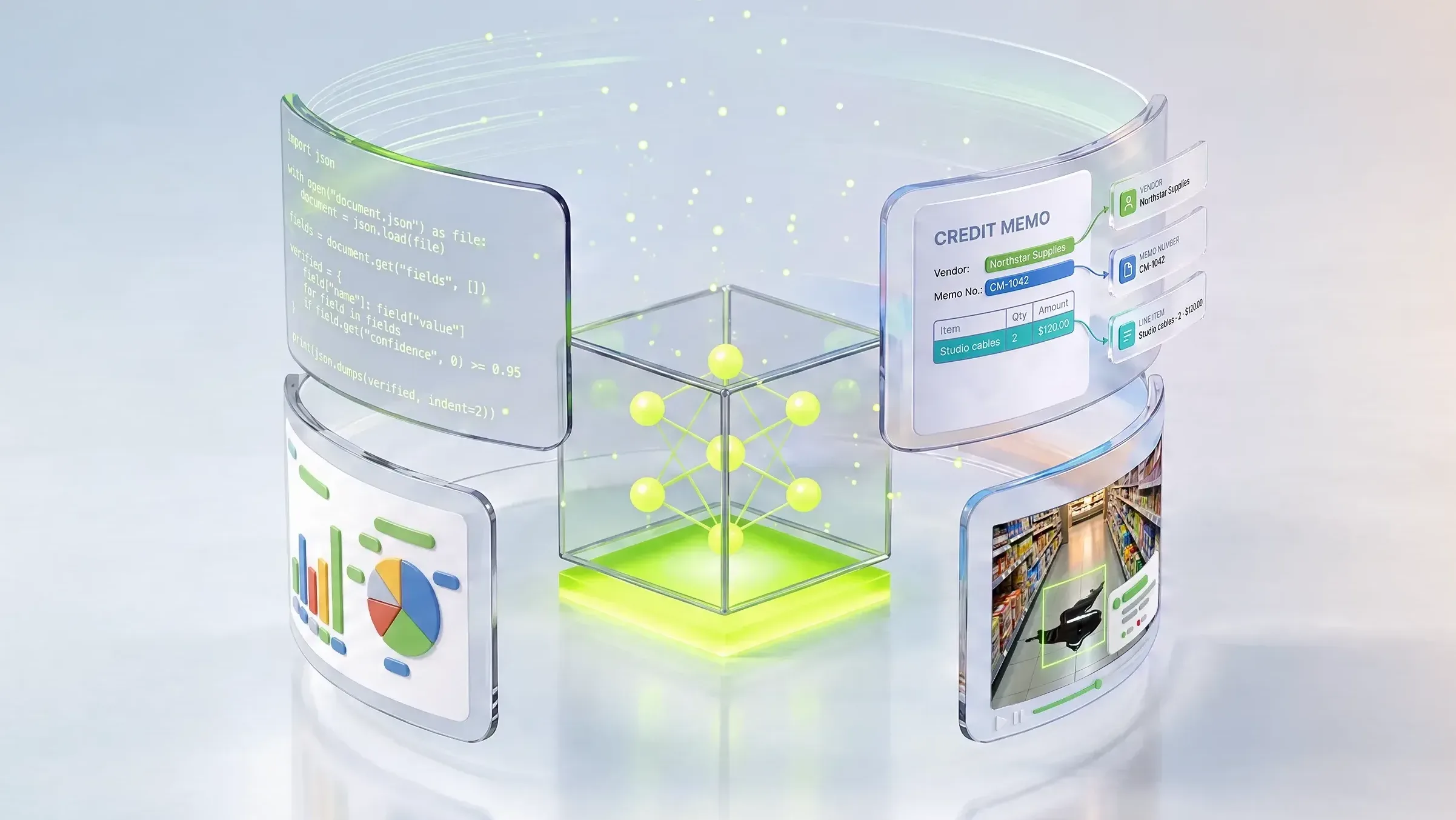
Nvidia has officially released Nemotron 3.5 Super VL, a sophisticated 120B-parameter multimodal model designed to anchor the next generation of specialized AI agents. Unlike traditional models that require separate vision-language components, Nemotron 3.5 Super VL integrates reasoning, instruction following, and tool use with a deep understanding of text, images, documents, and video within a single architecture. This release is specifically tuned for agentic workflows where a single request might involve cross-referencing documents and executing API calls, significantly outperforming previous iterations in both intelligence benchmarks and token efficiency.
- Mixture-of-Experts (MoE) Architecture: Utilizes a 120B-parameter total capacity but only activates 12B parameters per token, balancing high-tier reasoning with inference speed.
- Performance Benchmarks: Scored 26.5 on the Artificial Analysis Intelligence Index while delivering up to 5x higher throughput for agentic tasks on a single GPU compared to similar open models.
- Optimization Suite: Features near-lossless NVFP4 quantization, LiLiCorr speculative decoding, and quantization-aware distillation to maximize deployment efficiency on NVIDIA DGX platforms.
DO-AI Analysis:
From an architectural standpoint, Nemotron 3.5 Super VL represents the "industrialization" of multimodal MoE. By activating only 10% of its total parameters (12B of 120B) per token, Nvidia is solving the primary bottleneck of agentic AI: the high cost of "thinking" through complex, multi-step workflows. For engineering teams, the move toward NVFP4 quantization and speculative decoding signals that the frontier of AI is no longer just about model size, but about maximizing the "intelligence-per-watt" ratio. This model is a direct challenge to closed-source frontier models, offering a production-ready path for enterprises to build sovereign, high-throughput agents without the latency penalties of general-purpose LLMs.
2. Krea 3: Redefining the Unit Economics of Production Image Editing
The News Highlight:
Krea AI has launched Krea 3, a frontier image editing model engineered specifically for high-velocity production environments. While many generative models focus on artistic novelty, Krea 3 prioritizes precision and speed, allowing users to modify specific elements of an image without altering the broader context. The model is positioned as a direct competitor to high-end creative tools, offering a significant reduction in both time-to-render and cost-per-edit, making it viable for large-scale e-commerce and marketing pipelines.
- Inference Speed: Capable of finishing a complex edit in under 8 seconds, which is 4x faster than the Nano Banana Pro model.
- Cost Efficiency: Priced at approximately $0.06 per image, representing a 3x cost reduction compared to GPT Image 2 and other enterprise-grade competitors.
- Multi-Reference Composition: Supports the combination of up to eight distinct reference images into a single, cohesive output, facilitating complex product staging and architectural visualization.
DO-AI Analysis:
Krea 3 is a pragmatic pivot from "generative art" to "generative utility." In a production pipeline, the most expensive resource is the human-in-the-loop waiting for a render; by pushing edit times under the 10-second threshold, Krea 3 enables real-time iterative design. Architecturally, the focus on "changing only what you ask" suggests a highly refined control mechanism (likely improved latent masking or adapter-based conditioning) that prevents the "hallucination creep" common in standard diffusion models. For developers, the integration via providers like fal.ai and Baseten means this is a "plug-and-play" upgrade for any automated creative workflow.
3. GPT-Live-1.1: OpenAI Minimizes Latency in Multilingual Voice Interaction
The News Highlight:
OpenAI has announced the rollout of GPT-Live-1.1, an update to its voice interaction capabilities that focuses on linguistic nuance and reduced system latency. The update introduces new, high-fidelity voices for French, German, Hindi, Mexican Spanish, Korean, and Japanese, specifically targeting better regional accents and more natural prosody. A key technical improvement in this version is the reduction of the "checking..." state, where the model previously paused to process input, leading to a more fluid, near-instantaneous conversational experience across ChatGPT and Codex.
- Expanded Language Support: Native-level accent improvements for six major global languages, moving beyond the "American-accented" default of previous versions.
- Latency Optimization: Significant reduction in pre-response processing time, minimizing the "checking" phase that disrupts natural dialogue flow.
- Deployment Roadmap: Currently rolling out to all ChatGPT and Codex users, with an API release scheduled for the near future to enable developer integration.
DO-AI Analysis:
The transition from GPT-Live-1.0 to 1.1 is a masterclass in optimizing the "Time to First Token" (TTFT) for audio. In voice-first applications, latency is the ultimate UX killer; even a 500ms delay can make a conversation feel robotic. By reducing the "checking" overhead, OpenAI is likely optimizing the orchestration layer between the speech-to-text (STT) and the reasoning engine. For enterprise teams building global customer service or real-time translation tools, the improved regional accents are not just aesthetic—they are critical for user trust and accessibility in non-English speaking markets.
Morning Executive Comparison Matrix
| Dispatch |
Core Domain |
Production Maturity |
DO-AI Recommendation |
| Nvidia Nemotron 3.5 |
Multimodal Agentic AI |
High (Enterprise Ready) |
Deploy for complex, multi-step document and video reasoning tasks. |
| Krea 3 |
Visual Media Ops |
High (Production Speed) |
Integrate into e-commerce and marketing stacks to lower per-unit creative costs. |
| GPT-Live-1.1 |
Voice & Multilingual UX |
Beta (Rolling Out) |
Monitor for API release to upgrade global customer-facing voice interfaces. |